
Database search results
Back to simple search | Back to advanced search
- IdentifierID: PAS57BC21F300115B
- Show this many records per page: 10
- Sort: broadperiod
- Page: 4
You searched for:
Record ID: MAS-D100100
Object type: BOTTLE
Broad period: NINETEENTH CENTURY
County: Kent
Workflow stage: Published 
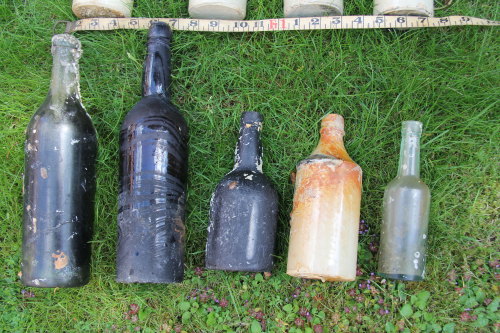
A collection of five bottles comprising two full-size glass bottles, one squat cylindrical glass bottle, one small clear bottle, and one stoneware bottle. All the bottles are believed to be of nineteenth and twentieth century type, although it is difficult to date all but the stoneware bottle.
The two full-size glass bottles are thought to be either wine or beer bottles. If the bottles have kicked bases, it would indicate a wine bottle, while a flat base would indicate a beer bottle.
The squat cylindrical glass bottle was thought to be a port bottle, however if the base is flat, thi…
Created on: Friday 11th August 2017
Last updated: Tuesday 22nd May 2018
Spatial data recorded.
Record ID: MAS-D100101
Object type: BOTTLE
Broad period: NINETEENTH CENTURY
County: Kent
Workflow stage: Published
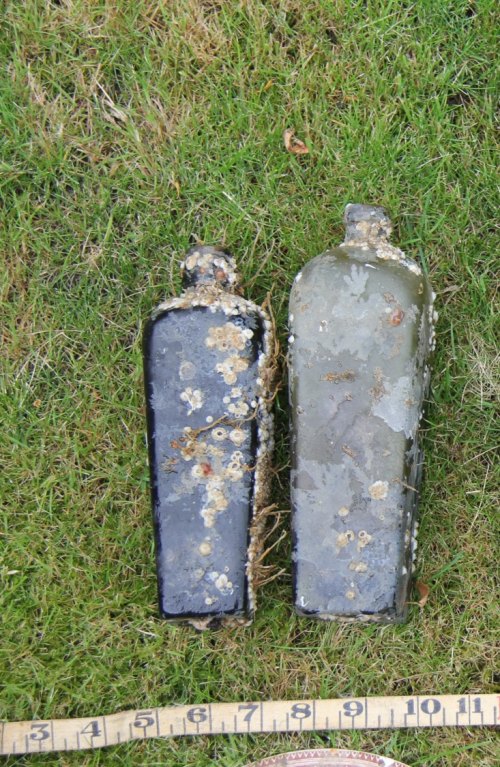
Two case gin bottles.
Some of the earliest liquor bottles were square in cross section and generally designed to contain gin though undoubtedly contained various types of liquor and possibly wine. Commonly called 'case gin' or 'taper gin' bottles since they would pack more efficiently in a case (6 to 24 bottles) than round bottles. Case gin bottles are square with a distinct taper inwards from the shoulder to the base. The neck is very short to almost non-existent with the finishes varying from a laid-on ring, flared, mineral finish, oil, and even a blob. This shape and style of bottl…
Created on: Friday 11th August 2017
Last updated: Tuesday 22nd May 2018
Spatial data recorded.
Record ID: MAS-D100035
Object type: JAR
Broad period: MEDIEVAL
Workflow stage: Published
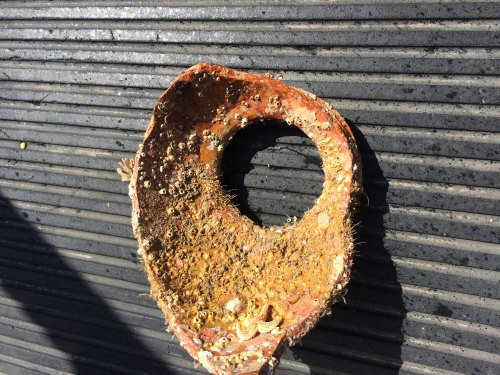
Part of a large clay storage jar. Due to the size of the fragment and the degree of marine growth on this item it has been tentatively identified as an olive jar, probably Spanish in origin, and dating anywhere between the medieval to post-medieval period (13th/14th to 18th century), most likely from the latter end of this date range (16th - 18th century).
Created on: Friday 7th April 2017
Last updated: Tuesday 26th September 2017
No spatial data available.
Records per page: 10 20 40 100
Sort your search by:
Which direction?
Total results available: 33
Search server index: asgard
You are viewing records: 31 - 33.
Search statistics
- Total quantity: 113
- Mean quantity: 3.424
- Maximum: 17
Filter your search
Object type
All Object type optionsCounty of origin
Broad period
Institution
Material
Workflow

About us
About our site

Data labs
Find us
Wessex Archaeology
Portway House, Old Sarum Park
Salisbury SP4 6EB
T: +44(0) 1722 326867
E: